Can short-term mortgage rates save you money?

Hitting your mortgage goals doesn't always mean choosing a 5-year rate.

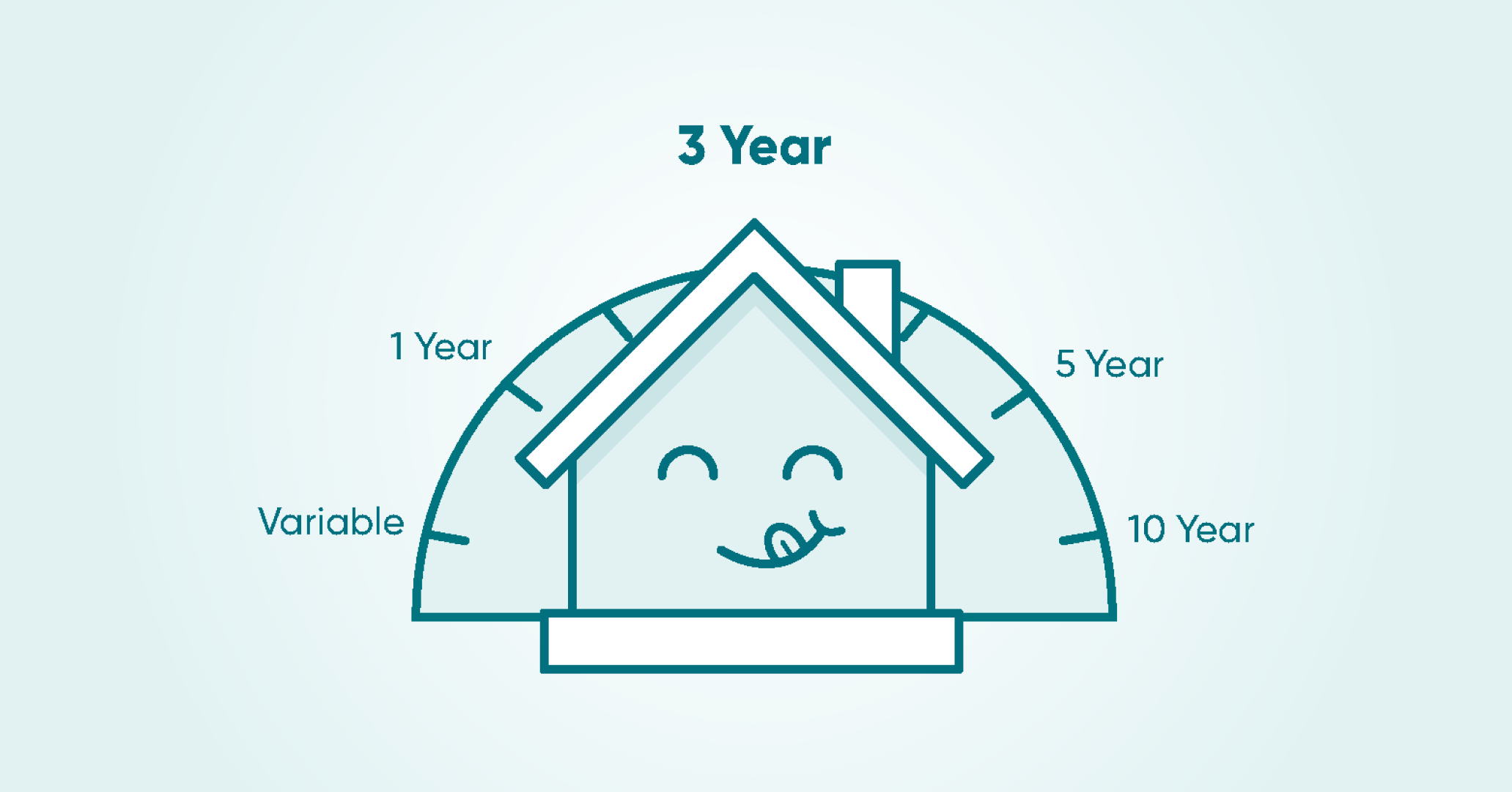
Here's when choosing a shorter term of 1 to 4 years might make budget sense.

Oct 02, 2026

Updated from Mar. 29, 2023

Short-term sweet spot? The middle ground may save you cash.

Amid economic volatility, or when 5-year fixed mortgage rates are higher or rising, some home buyers and owners consider shorter mortgage terms, such as a 2- or 3-year fixed rate, as a middle-ground option for their budget strategy.

The popular 5-year term (for both fixed and variable rates) can offer great rates while giving you more time without managing renewals. But with changing prime rate forecasts and recent fixed-rate market pressures:

  • 5-year variable rates may pose too great a risk of change for budget-conscious borrowers.
  • But 5-year fixed rates may be too high.

Enter the short-term fixed rate, which is often lower than a 5-year fixed. It could save you money compared to a higher rate, but it also lets you renew sooner, which carries its own risk, since you won't know what rate may be waiting for you.

Let's explore shorter-term fixed rates as a short- or long-term budget strategy.

Short-Term Takeaways:

  • 2- and 3-year short-term fixed rates are often lower than 5-year rates.
  • Renewing more often can save you money if rates are lower, but it can also mean paying a higher rate sooner.
  • Moving soon? A shorter term may help you avoid a mid-term penalty.
  • If prime rates are rising, a short-term rate can offer a budget compromise between a 5-year variable and a 5-year fixed.
  • Surfing from short-term to short-term may save you money over your mortgage lifetime.

What are the benefits of choosing a shorter-term fixed rate?

In most cases, 2- and 3-year fixed mortgage rates can be about 0.20% to 0.30% cheaper than a 5-year fixed. A 1-year fixed rate tends to be a bit higher than a 5-year, as lenders have to absorb admin costs over a shorter period.

When does it make sense to lock in to a lower rate for less time?

  • You want to save now with a lower short-term rate compared to a higher 5-year rate.
  • You're willing to take a chance with a faster renewal.
  • You think renewal rates will be lower or remain steady at renewal.
  • The average Canadian homeowner only makes it to 3.89 years (of their 5-year term) without a major change or moving homes, so a shorter term may help you avoid breaking your term and paying a hefty penalty.

Compared to the risk of change with a variable rate, a short-term fixed rate can offer some budget room while giving you more payment certainty.

If your short-term rate is higher than a 5-year fixed (like a 1-year rate), you may still save if you think renewal rates will be lower.

What are some downsides to a short-term mortgage?

  • You'll have to manage your renewal sooner.
  • If rates go up, you'll pay a higher rate sooner — don't just say yes to your bank's offer; have your True North expert broker shop for your best rate.
  • If short-term rates are higher (than a 5-year variable or fixed), you'll pay more interest during your term.

Can surfing shorter terms help you save more over the life of your mortgage?

During economically stable times, short-term fixed mortgage rates tend to be lower than 5-year fixed rates. Why? Because the mortgage contract is for less time, it means the lender's costs are lower, there's less risk that you'll default, and they don't mind the chance you'll pay a different rate sooner.

So, if you keep locking in a low, shorter-term mortgage rate, term after term, you may save more than going with a higher 5-year rate, term after term.

A short-term fixed rate isn't without risk. Renewing more often means choosing a new rate more often. Of course, you can change your mind at renewal and choose a different rate or term length if the markets don't give you confidence to continue your short-term strategy.

Take our Compare & Save calculator for a spin to see how much you could save now with a short-term fixed rate. An expert True North broker can offer unbiased advice based on your unique mortgage details.

Where are fixed rates going? 

Fixed rates are currently under pressure from geopolitical events that have raised oil prices and introduced trade tariffs that threaten to raise inflation both in Canada and globally.

Keep an eye on fixed-rate movements and prime rate forecasts to help inform your mortgage rate strategy.

See our short-term rates.

We take the high (mortgage) ground to help you save.

Our highly trained, salaried True North Mortgage brokers know the rate trends and can access a wide range of lenders to find your best mortgage, while passing along a volume rate discount to secure your best rate.

Every mortgage is different, and so are your needs. We'll help you decide what level of risk suits your situation based on your homeownership goals and comfort level.

Anywhere you are in Canada, we're here to talk budget strategy. We can help you online, over the phone, by email, or drop by a store near you.

Short-term savings, long-term mortgage support.