How can you use pre-payment options to help speed your principal paydown?
At True North, we're always talking about a 'better' mortgage. That's because, along with getting your best rate, we believe flexible pre-payment privileges are essential and can help you save even more.
Here's some advice we give our clients on how to get ahead of interest costs:
- Increase your regular payment amount
- Double up a payment, or add more to a payment when you can
- Put a lump sum down every year (your mortgage should have an 'anniversary' date of when you signed)
- Increase your payment frequency to an accelerated schedule
Even putting an amount down now and then, whenever you happen to have a bit of budget room or extra funds, can add up to a real difference in your mortgage timeline and savings.
Stay within your mortgage pre-payment allowances! Be careful about how much you put down and when. Your privileges, outlined in your mortgage fine print, also come with a penalty if you pay too much, which can impact the lender's costs and expected revenue for your contracted time.
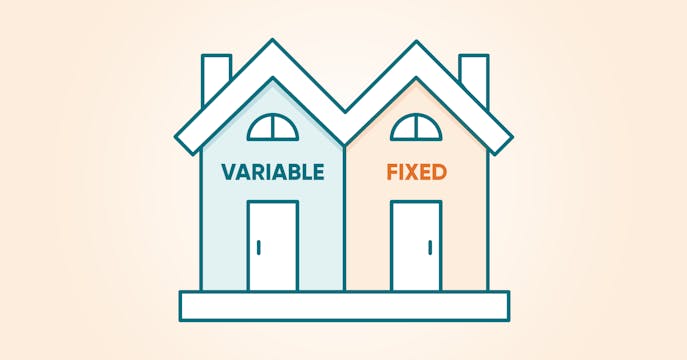
That penalty can be more expensive with a fixed-rate mortgage, as a lender uses IRD (Interest Rate Differential) calculations that can cost thousands more than a 3-month interest penalty that typically comes with a variable-rate mortgage.
How much can you save by putting more down?
Some mortgage products, such as those offered through our in-house lender, THINK Financial, may allow you to put down as much as 20% against your principal each year.
This allowance means you can increase your regular payment by up to 20% or make annual lump-sum payments of up to 20% of your original mortgage amount (or a combination of both, up to 20%).
Here's an example of increasing your payments by 20%
Let's take the 20% pre-payment privilege example and apply it to a $450K mortgage loan:
- A $450K closed mortgage amortized over 25 years at a 5-year fixed rate of 4.50%
- Lender allows for a 20% increase in your regular payments
- With your regular payments of $2,490/month with no monthly increase, your remaining amortization after 5 years would be the usual 20 years
- Now increase your regular payments by 20% to $2,988/month
- Your remaining amortization after 5 years would be 13 years and 5 months, knocking off over 6 years on your mortgage timeline
If 20% is too much to squeeze out of your budget, a smaller increase or adding a bit more to a monthly payment here and there can still shorten your amortization over time to save more.
Here's an example of using the 20% lump sum payments every anniversary year of your term
Using the 20% example above:
- On a $450K mortgage at a 5-year fixed rate of 4.50%, you could put up to $90,000/year in lump-sum payments on your mortgage.
- If this option is the only one you use, you could pay off your mortgage in less than 5 years!