A rocky year bookended by uncertainty — and rate cuts.
To start the year:
U.S. President Trump starts in January, and Canadian interest rates drop.
Before Donald J. Trump retook the U.S. Presidential reins on January 24, 2025, his threats of tariffs on Canadian goods were already in the air and impacting Canada's rate and housing markets.
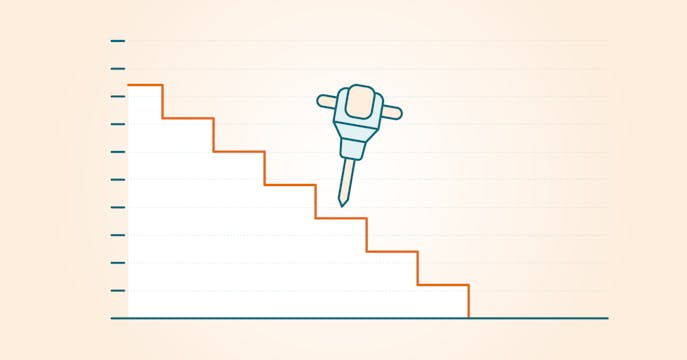
On January 29, five days after Trump was sworn in, the Bank of Canada cut its policy rate by 0.25% and again in March, bringing it to 2.75%. The early rate cuts were intended to head off a potential economic hit from Trump's significant tariff and trade upheaval, a disruption not seen since the U.S. government imposed heavy tariffs back in the 1930's (which history shows didn't go well for the global economy).
The best advertised 5-year fixed mortgage rates started the year at around 4.24%, then fell slightly ahead of the March BoC cut.
Stacking in the middle:
An expected spring housing rush that didn't break ground (all year).
The national housing market remained relatively subdued throughout the year (Quebec was the most pronounced provincial outlier). An expected spring rush didn't fully materialize like in past years. Real estate experts then pinned hopes on a summer rush, then a fall rush, and crossed fingers for a winter one. But it turns out Canadians didn't like looking for homes in maple-leaf-cold, thinly lined by U.S. trade uncertainty.
A new Prime Minister, a prefab promise, and a GST rebate.
Mark Carney of the Liberal Party was elected on April 28, 2025. With his installation came several housing-related promises, including rehabbing the prefabricated housing and catalogue concept from the 70s to boost home-building and help ease Canada's housing crunch — and delivering a much-requested GST rebate on all new homes for all buyers.
The BoC pauses its rate amid Trump chaos.
Waiting for U.S. clarity on tariffs and trade expectations was like watching a ping pong match where nobody wins. The numerous threats, backtracks, and changes riddled our tariff blog with a list that kept growing (we eventually gave up, with the uncertainty and threats continuing into 2026).
But uncertainty held the central bank back from cutting or raising rates during these middle months, with economic data suggesting it needed to monitor inflation, and that the Canadian economy seemed to be holding above the recessionary line despite sectors such as steel, aluminum, autos, and lumber being heavily affected.
Ending the year:
Continued trade uncertainty, more rate cuts — and no recession.
By Fall 2025, Canadian GDP (Gross Domestic Product) growth was veering toward a recession (evidenced by a Q2 contraction), and the labour market was softening. The Bank of Canada posted another 0.50% in rate cuts — 0.25% in September and again in October — taking its policy rate to 2.25% (the low end of its neutral rate range).
The late-year rate moves likely helped Canada avoid a recession in 2025, with GDP eventually eking out an annualized growth rate of 0.6% in Q4. The unemployment rate rose to 6.8% by year's end, but domestic consumer demand seemed to be holding ground heading into the new year.
Variable-rate choices finally trumped fixed rates.
Despite the (still very) recent memory of skyrocketing prime rates to tame post-pandemic inflation, prime rates at the end of 2025 were now down by more than half from the 7.20% peak hit in 2024. More True North clients chose the savings of a much lower variable rate over a fixed one in the last months of the year, seeking extra cash in their pocket amid the uncertainty.
Home prices dipped, especially in BC and ON.
A cooling 2025 Canadian housing market led to a 2.8% decline in the national average home price to $683,158 (year-over-year). That decline was heavily weighed by the higher-priced centres in BC and Ontario, despite other provinces showing price increases for the year. Quebec and the Atlantic region saw the largest price increases due to tighter inventory as sellers held back, and buyers seemed less concerned about the trade uncertainty.
Pre-sale condo markets in the Toronto area continued their historical collapse, with a +35% paper loss relative to 2025 market value, and 10% of buyers walking away from deposits rather than completing the sale.
Note: Regardless of the overall housing story, Canada is the second-largest country by area in the world, and its markets can vary widely.